
A Guide to Gender Performativity in Turkey.
In Northern Turkey I learned that men can wear skirts and dance.1
Yet, the hairdresser frowned:
“Let’s stop here, otherwise you’ll look like a boy.”
As if it’s the most terrifying thing that could happen to a bearer of breasts and a vāgīna.
The bus stopped in Izmir. Compared to the harsh winter of the Black Sea shore, the Aegean coast met the passengers with the hot embrace of paradise.
I asked an elder stranger:
“How to reach the city centre?”
Upon seeing my curved body, free of sweater, coat, and scarf, he exclaimed:
“Abi2! You’ll need a dolmuş!3”
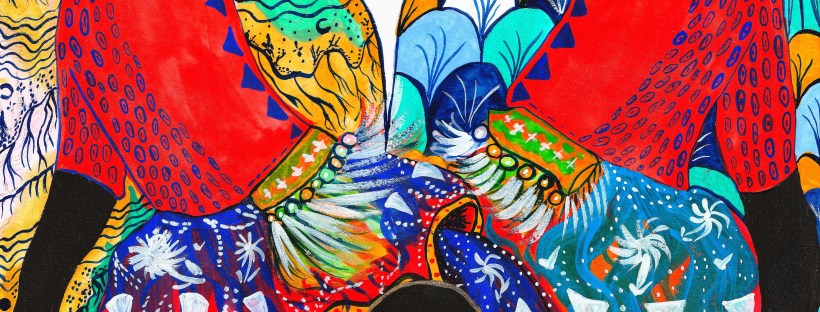
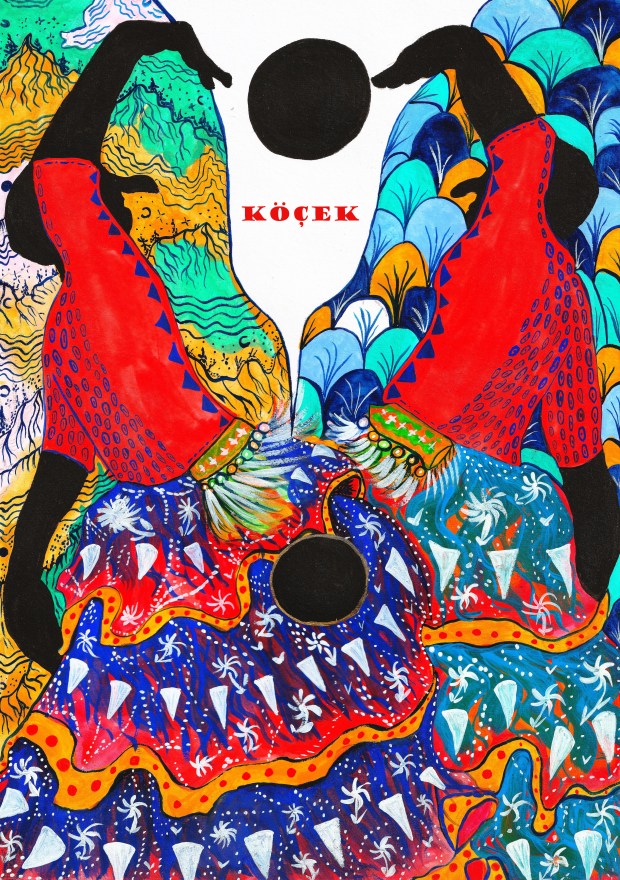
1 A reference to “the köçek”, Turkish male dancers who cross-dress for the entertainment of guests during weddings. Before (18th–19th century), the köçek performed in Ottoman palaces, but nowadays they are part of folk culture, especially in Northern Turkey (the Black Sea coast).
2 Abi (Turkish; [aːˈbiː]) – older brother. Often used for men in casual speech; however, in more liberal and modern İzmir, unlike rural Anatolian regions, almost anyone can be addressed as “abi”, it loses much of its gendered meaning.
3 Dolmuş (Turkish; [doɫmuʃ]) – a minibus.
About the author
Ara Chalym is a non-binary linguist, illustrator, and author of Russian-Turkish origin. They graduated from Moscow State Linguistic University and later studied social communications at the University of Bologna for two years. However, Ara eventually decided to change careers and pursue art instead. In both their artwork and writing, they address contemporary social and political issues, viewing them through the lens of folklore and the cultural heritage of both their homelands.
 #EnbyLife