Content warning: Themes of internalised homophobia and being ‘outed’.
It was the second time this week Syd had called and said, ‘let’s get out of the city’ – so we did. The car creaked as we drove up the Westgate. Syd put on some twangy country music and smirked at me. It wasn’t my kind of thing, because I grew up in the country and never listened to it, but Syd liked it and I liked listening to her try to keep in time with the mandolin. The mesh long sleeve she was wearing reflected rainbow colours under the harsh tollway lights. We were headed for Wye River, a sometimes grey, sometimes blue cove, where I grew up.
‘It’s about time we went away together.’
‘We had that camping trip a few weeks ago,’ I reminded her.
Syd groaned. ‘Doesn’t count because we were with all your friends.’ Syd went to school with my housemates. It was an art school and no one had to take religion. You could be queer and no one would care, or at least no one would say anything to incriminate or humiliate.
‘You don’t like them anymore?’
‘No. I’m bored of everyone.’ Syd turned up the music.
A lump of air clung to my tonsils, it sat there at the back of my throat like a lozenge. I was suspicious that she was bored of me too.
The wind was pushing us down the bridge’s slope, making soft hooting sounds as it slipped through the window’s slim cracks.
We kissed a couple of months ago. I told her that she was my first, the first woman. She squealed and told me I was cute, but nothing romantic had happened between us since. After the kiss, I spent a lot of time on reddit scrolling through coming out stories. I was trying to anticipate my mother’s reaction without having to live my mother’s reaction.
According to reddit, one mother said,
‘Oh well that’s great! You know, it’s not a big deal these days.’
Another said,
‘Get out of my house!’
And then there was,
‘Me too!’
I went to turn the heating up. Syd’s hand met my finger. She turned it over in her palm. The car, where judgement was impossible, was my favourite place to hold Syd’s hand. We passed the southern cross, the midpoint of the Westgate. When I was alone with Syd, I did feel bad that I hadn’t told anyone about us – yet. I wasn’t sure if there was anything to tell. We hadn’t named the air between us. But we were together a lot of the time. Talking, driving, lying closely next to each other on her futon bed. When I was with my friends though, I felt like I was being dishonest – like I should be somewhere else.
Syd closed her eyes as we exited the bridge. I was anticipating the ocean, the offshore chill and folding waves. I missed the trees too. I wanted to show Syd the mountain ash tree around the corner from my parent’s place, where I used to sit and read until the day the leeches discovered me. My invisible cuts that bled endlessly. When I was in year seven, I would sit at the bottom of that tree and write words that you couldn’t say in church:
Fuck
Oh my god
Lesbian
At the exit for Geelong the trees were there in full, guiding us like pickets. When Syd opened her eyes, her tone had changed.
‘So, what’s she like?’
‘Who?’
‘Your mum’.
‘Oh, um. She’s very maternal.’ I checked Syd’s expression. Her features were loose. ‘She’s like … a mum, you know?’
Syd nodded slowly, one of the ways she showed that she was listening intently. She was a good listener and talking about our families was a habit of ours. We’d be the ones at the party, sitting in the gutter, having a D&M and sharing the same cigarette.
‘And, uh, she likes the pace of living out here.’
‘Of the country?’
‘Yeah.’
‘Interesting,’ she said. ‘I don’t know how people do it.’
I didn’t know what to say to that. How can you explain a childhood in one sentence? I didn’t want to reduce its significance. If I tried to explain the comfort I found in the sea, all meaning would be lost. The rural routine that cosseted my mum and how it once cosseted me.
Syd broke the silence. ‘It’s okay you know … I’m good with parents.’ She reached over and squeezed my hand.
I wondered what meeting my mum meant to Syd.
‘I saw on Instagram that a Banshee has been out here lately. Tormenting tourists,’ she said.
‘Who?’
‘You don’t know what Banshee is? Are you even a lesbian?’
I had nothing to say – looked back on the road. It was a big scary unknown to me, queerness. I didn’t have the glitter or the charisma. I wasn’t sure I even liked the word. It was too broad. Too general.
‘Well, anyway, she’s a ghost.’
I felt Syd’s eyes on me.
‘They’re really called Bean Sídhes which means women of the otherworld’, Syd continued, ‘and she comes out when a death is imminent and walks around and screams at everyone.’
I let some air in. The smell of cow manure sucked into the car.
‘Some people think she’s screaming about horrible shit that’s happened to people.’
A green road sign read: 59 Anglesea. Half a tank of petrol. We were in that lonely stretch of road marked by two petrol stations an hour apart.
‘The Bean Sídhe is definitely queer – anyone who cares about –’
THUD. I slammed the breaks. The tires screamed.
‘What the fuck was that?’ Syd fell back into the passenger seat.
I unbuckled my seat belt and walked into the headlights. Its body was splayed-out. Amidst the glare, it looked sacrificial. Syd stayed in the car. The fur of the wombat was dark brown, muddied in some parts with wet patches of red around its stomach. It was missing an ear.
‘Syd! Can you help me.’
She popped her head out the window. ‘What is it?’
‘A wombat.’
Her seatbelt unclicked. She got out and stood behind me, peering over my right shoulder.
‘Do you think there’s a wombat Bean Sídhe?’ she said quietly.
I closed my eyes.
*
When I was around eight years old, my mum started to tell me secrets. Family secrets. Like how her sister didn’t want to marry my uncle. On her wedding day, while her hair was getting pinned and spoofed, she said to her mum, ‘I don’t know if I can do this.’
Her mum said, ‘Of course you can. Everyone gets nervous on their wedding day.’
So off she went, down the aisle, and into a loveless marriage.
*
‘Help me drag it.’
‘Ah.’
‘Please, Syd.’
‘I mean, you did this!’ her hands flailed.
‘Why would you –’
‘I don’t know! You country people are …’
‘Are what?’
‘Fucking reckless sometimes!’
I shook my head and turned away from her. Back to the wombat. The poor wombat. I placed my hand to the lower part of its chest. There was no pouch. Thank God. We swaddled it with my raincoat, took a side each and carried it over to a wire fence. It was the beginning of someone’s property. They’d notice, hopefully, I told myself. It wouldn’t rot there.
We were mostly quiet all the way to Anglesea. There were knots in my chest. I tried to roll them out with my fist. The closer we got, the more I questioned this whole plan. Would my mum know that we were more than friends? Were we more than friends?
Something in the car had shifted. We kept the windows down. There was that death smell, dry and distinguishable. Syd scrolled Instagram. She announced at one stage, ‘I’m sorry,’ she cleared her throat, ‘about before.’ She rested her head against the window.
I reached a hand over to her side, flailed for a moment, before I found her hand and entwined her fingers in mine.
‘Thanks,’ I said, and thought on which moment Syd’s apology was meant for. I decided it didn’t matter; an apology was an apology.
Sometimes I imagined my life without Syd in it. I loved her but not her moods. The way they’d change without any warning. At least, I could never find the catalyst. But if Syd hadn’t kissed me, I would know less about myself. About everything. That made it feel significant. We were significant.
The wind was getting stronger – howling through the gaps at the top of the windows.
‘So, have you told anyone yet? Your housemates at least?’
My stomach rolled. I knew this would come up. Syd wanted me to be braver.
‘You would know if I had,’ I said. It sounded weak. If I could hear it, she could hear it. The car rattled over the narrow, weathered bridge into Anglesea. The lights were out at the servo.
‘Fuck. Is it closed?’ I pulled over. Syd was staring at her phone.
I pulled into the servo carpark and up to the unleaded pump. There was one light on inside.
‘Okay. I’m going to go in and check,’ I said.
‘Nope. I will. I need some air,’ Syd had already unbuckled. I watched her flick the door closed and walk through the sliding door, her swaying gait.
*
The first time that I felt betrayal was when I was six. I was over at a boy’s house. We were playing in the back garden, pouring water into mud and swirling it around with sticks. He said,
‘I need to pee,’ and went behind the cubby house.
I said, ‘me too,’ and squatted behind the tree.
When he realised that I too had peed outside, he ran inside yelling to his mother, ‘girls can’t pee outside!’
I almost died from that embarrassment, from the confusion.
*
Syd got back into the car. ‘It’s closed.’
‘Fuck.’
‘How do you not remember the opening hours?’
‘I dunno. It’s been a long time.’
We were across the road from the beach. I needed to see the water.
‘See that bench over there?’ I pointed.
‘Why don’t we just text your mum? Surely jerry cans are her bread and butter.’
‘She’d be asleep. I think we’ll make it on a quarter tank, honestly.’ I brushed her forearm.
We crossed the road and sat at the bench. It had a soft mouldy crust and an array of ciggy butt stains, posited facing the water. It was this spot that reminded me I’d rather run out of petrol than introduce Syd and Mum tonight. I needed one more night to work out exactly what I was going to say; I could say I’m bisexual, but I wasn’t sure that that was true. Lesbian? Queer? Which word gave me room to grow?
Syd was smiling and looking down at her phone. She looked beautiful. Her dark hair bobbed around her face in the shape of a crescent moon.
She pulled out a gold hairclip with an embroiled clover at the end and used it to tuck a stray curl of mine.
I smiled.
She rested her head on my shoulder.
I could’ve stayed like that.
Syd sat up and smirked at me.
‘What is it?’ I asked.
‘A few things … this place is fucking beautiful.’
It meant so much for me to hear that.
‘And,’ her cheeks lifted. ‘I made a post, so now you won’t have to.’
‘You what?’ I croaked.
‘I’ve done you a favour,’ she cooed.
I pulled my phone out and opened Instagram. There was a photo of me driving the car, taken probably an hour ago. The caption read:
‘This country bumpkin is queer af!’
‘What the fuck, Syd.’ I scrambled to pull my phone from my pocket.
‘It’s not a good secret to keep. Trust me. Everything is better when you’re out.’
‘It was mine to tell!’ I yelled. I never yell. ‘What have you done,’ I murmured. It was there at the top of my feed. What have you done.
The wind picked up, whipping the untucked hair around my face. When I cleared it from my eyes, there was a person, a translucent sturt figure standing in front of us. She saw us there – took in the image: me and Syd sitting in frayed tenderness. The light from my phone, blaring onto our faces.
She shrieked, piercing my sinuses. A cold, wet hand griped my wrist and pulled me forward. I knew this hand, it’s deep wrinkles. I’d traced them before. Small and sunburnt on the couch. I tried to wriggle free. But when the moonlit wintered water hit my ankles, there was nothing, no one, holding on to me anymore.
About the author
Grace Hall is a queer, crip writer and disability support worker based in Naarm (Melbourne). Grace’s writing explores the joys and pitfalls of growing up queer in rural Victoria. Her work has been published by Bramble Journal, Paper Road Magazine and Writers Victoria. In 2022, Grace was a participant in Toolkits Lite: Non-fiction program.
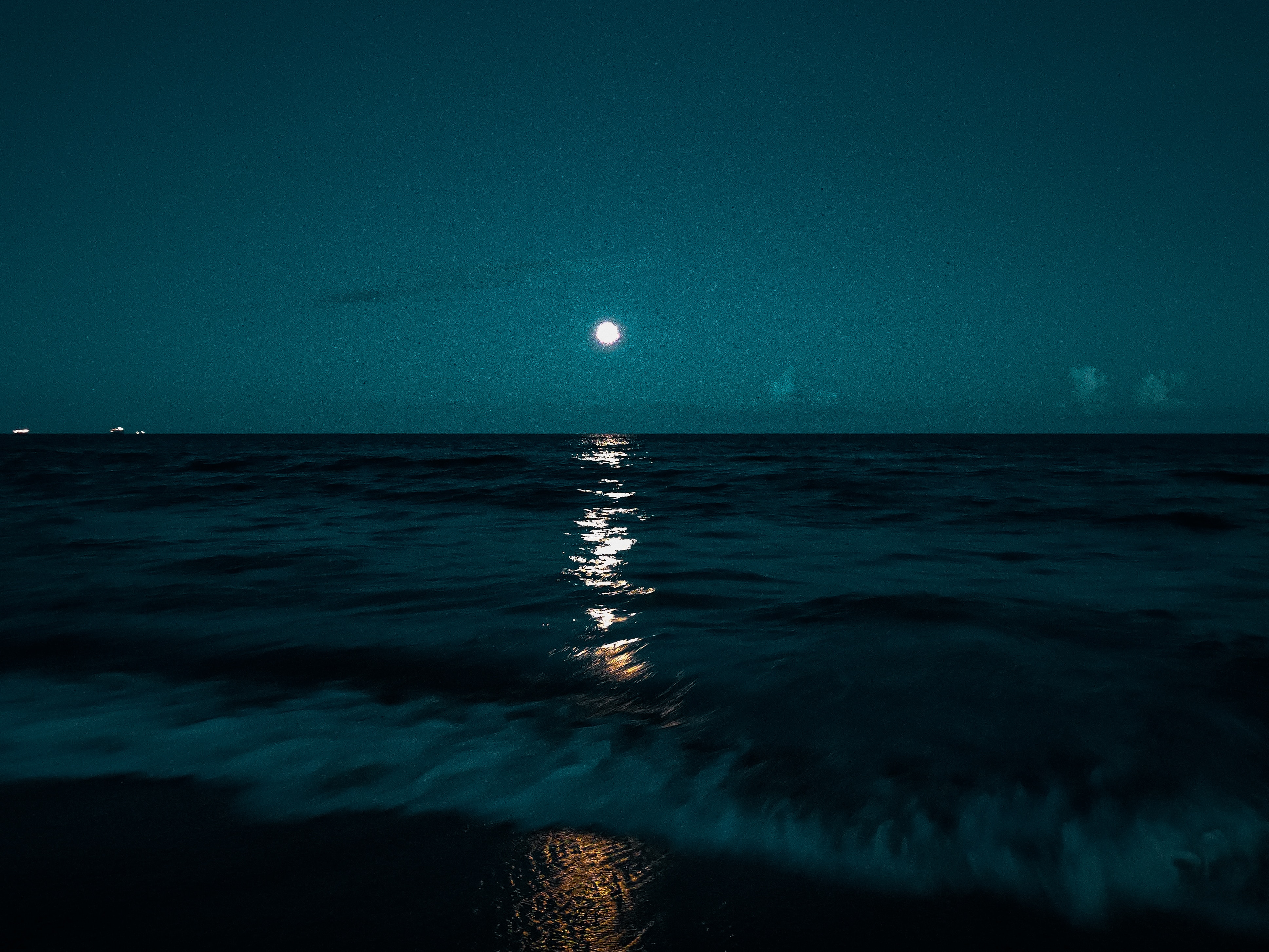
Photo by Shraddha Agrawal on Unsplash.
 #EnbyLife